


AI Applications in Renewable Energy: The Smart Grid Revolution
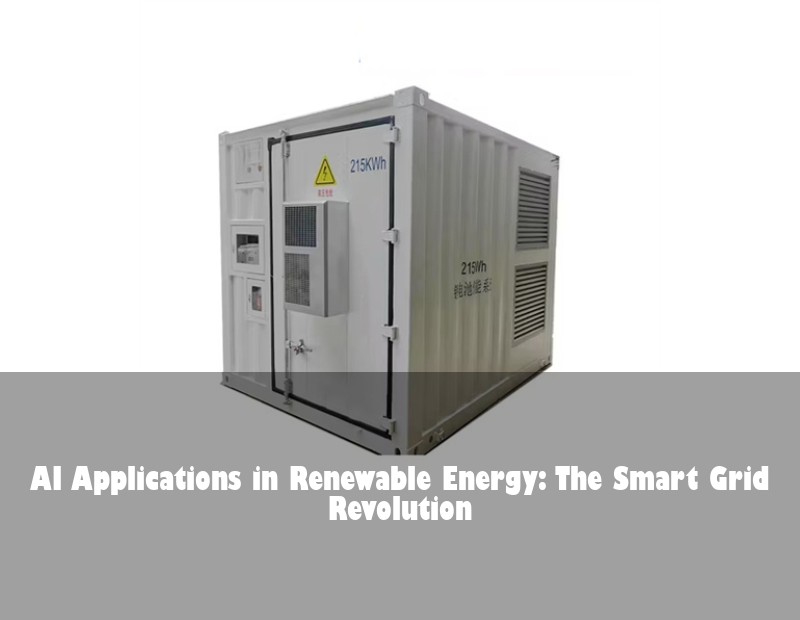
Ever noticed how your phone predicts your next word? That same artificial intelligence is now supercharging renewable energy systems globally. As Europe accelerates its clean energy transition, AI applications in renewable energy are becoming the secret sauce for maximizing solar output, optimizing battery storage, and creating self-healing grids. Let's explore how this digital brainpower is solving real-world energy challenges.
Table of Contents
- The Renewable Energy Predictability Problem
- How AI is Reshaping Solar and Storage
- Nordic Success: AI-Powered Wind Farms in Sweden
- Beyond Optimization: AI's Next Frontier
- Your AI Energy Future: What Comes Next?
The Renewable Energy Predictability Problem
A German solar farm suddenly loses 40% output as clouds roll in, while Danish wind turbines sit idle during unexpected calm. These aren't hypotheticals – they're daily realities causing €1.2 billion in annual grid balancing costs across the EU. The core challenge? Renewable energy's inherent variability makes traditional grid management feel like driving blindfolded.
Three critical pain points emerge:
- Forecasting errors costing up to €10/MWh in imbalance penalties (ENTSO-E data)
- Preventable equipment failures causing 3-5% annual energy loss
- Battery degradation from suboptimal charging cycles
Without intelligent intervention, these inefficiencies threaten Europe's 2030 renewable targets. But what if machines could learn to anticipate these issues?
How AI is Reshaping Solar and Storage
Enter neural networks and machine learning – the game-changers turning raw weather data and equipment telemetry into actionable intelligence. Unlike traditional software, these systems continuously evolve, creating a virtuous cycle of improvement.
Predictive Maintenance: The Self-Aware Solar Farm
When Spanish solar operator Iberdrola deployed AI across 50 sites, something remarkable happened. Algorithms began detecting inverter failures 14 days in advance by analyzing harmonic distortion patterns invisible to humans. Result? A 22% reduction in maintenance costs and 3% higher annual yield.
Smart Grid Orchestration
Consider Belgium's Elia Group, where reinforcement learning algorithms now balance grid frequency in milliseconds. Their AI system processes:
- Weather satellite feeds
- Demand patterns from smart meters
- Real-time storage SOC (state of charge)
This digital conductor reduced grid stabilization costs by 18% while integrating 9% more renewables – proving AI's role as the ultimate grid integrator.
Hyperlocal Forecasting
Traditional weather models struggle with microclimates, but UK's Open Climate Fix (backed by Google DeepMind) uses convolutional neural networks to predict solar irradiance at 1km resolution. Their models cut forecasting errors by 50%, saving National Grid £100,000 daily during volatile conditions.
Nordic Success: AI-Powered Wind Farms in Sweden
Let's zoom in on Vattenfall's Kriegers Flak offshore wind project – Europe's answer to AI-driven renewables. Facing harsh Baltic conditions, they implemented Siemens Gamesa's Deep Learning Power Upgrade with stunning results:
- +4.5% annual output via real-time blade pitch optimization
- 19% fewer maintenance visits using vibration analysis
- €2.1 million saved in first year (validated by IEA reports)
What makes this revolutionary? The AI doesn't just react – it proactively adjusts turbine configurations based on predictive saltwater corrosion models and wake effect simulations. As Vattenfall's CTO noted: "It's like having 200 PhD meteorologists and engineers working 24/7 inside each turbine."
Beyond Optimization: AI's Next Frontier
While current applications focus on efficiency, emerging breakthroughs promise transformative change:
Generative AI for System Design
Tools like PVSketch AI now generate optimal solar layouts in minutes by processing satellite imagery and local regulations – a task that took engineers weeks.
Blockchain-AI Hybrids
Pilot projects in Amsterdam use smart contracts to autonomously trade surplus solar between buildings, with AI predicting community demand patterns.
Material Science Acceleration
At Cambridge University, ML algorithms recently discovered new perovskite formulations for solar cells in 3 months – 20x faster than traditional R&D.
Your AI Energy Future: What Comes Next?
We've seen AI boost output, slash costs, and even invent new materials – but here's my question to you: Which renewable energy challenge should we task AI with solving next? Should we prioritize grid resilience during extreme weather? Democratize energy trading? Or accelerate storage breakthroughs? The algorithms are listening...
 Inquiry
 Online Chat