


Automatic Backup Generator: Your Seamless Shield Against Power Outages
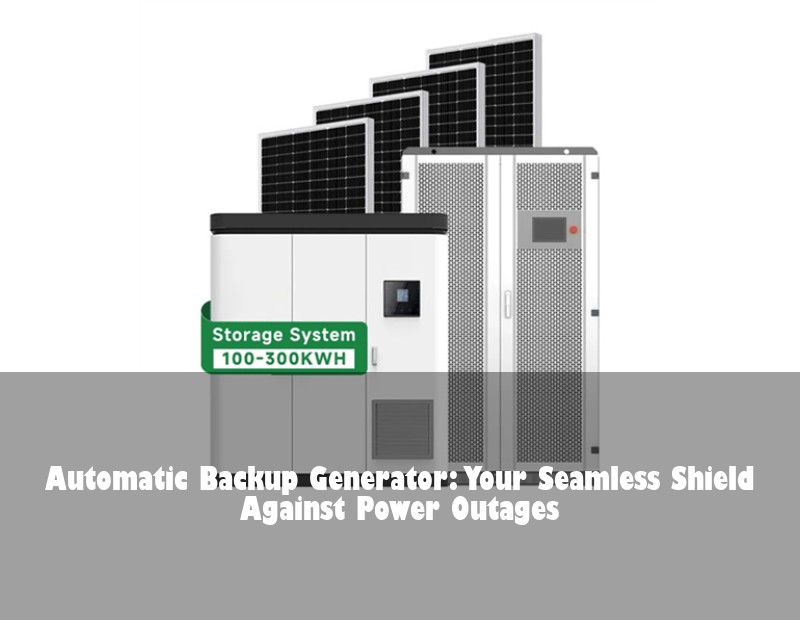
Have you ever faced a sudden blackout during a storm, watching your freezer thaw or your home office grind to a halt? For millions across Europe, power instability is no longer a rare inconvenience but a growing reality. Enter the automatic backup generator – a game-changing solution transforming how homes and businesses handle energy disruptions. This article explores how intelligent backup systems, especially solar-integrated models, are redefining energy resilience across Europe.
Table of Contents
- Europe's Escalating Power Outage Challenge
- The Hidden Costs of Power Interruptions
- Why Conventional Generators Fall Short
- Solar-Powered Automatic Backup: The Intelligent Alternative
- Real-World Success: A German Case Study
- Implementing Your Backup System: Key Considerations
- The Future of Energy Resilience
Europe's Escalating Power Outage Challenge
Europe faces a perfect storm of energy instability. Extreme weather events increased by 30% over the past decade according to the European Environment Agency, coupled with aging grid infrastructure, have made power disruptions commonplace. From Mediterranean heatwaves to North Sea storms, no region is immune.
The Hidden Costs of Power Interruptions
Beyond inconvenience, outages carry tangible consequences:
- Economic Impact: SMEs lose €150-€500/hour during blackouts (EU Commission data)
- Home Vulnerabilities: Security systems, medical devices, and climate control fail
- Food & Safety Risks: 72% of European households report fridge spoilage during extended outages
Why Conventional Generators Fall Short
While traditional diesel generators provide backup power, they come with significant drawbacks:
- Manual activation required (problematic during travel or nighttime outages)
- Noise pollution exceeding 75dB – equivalent to busy street traffic
- CO2 emissions up to 2.7kg per litre of fuel burned
- Ongoing fuel costs and maintenance burdens
Solar-Powered Automatic Backup: The Intelligent Alternative
Modern solutions combine solar panels, battery storage, and smart inverters to create seamless backup systems. These automatic backup generators detect outages within milliseconds and restore power without human intervention.
How Automatic Backup Systems Operate
The magic happens through a three-stage process: 1) Continuous grid monitoring, 2) Instant disconnection during outages (islanding), 3) Automatic power transfer from batteries. Solar arrays recharge the system during daylight, creating a sustainable cycle.
6 Critical Advantages Over Traditional Generators
- Silent operation (below 30dB)
- Zero emissions during use
- No fuel costs after installation
- Remote monitoring via smartphone apps
- Seamless integration with existing solar systems
- Multi-day resilience through smart load management
Real-World Success: A German Case Study
Consider the Müller residence in Bavaria – a region experiencing 40% more storm-related outages since 2018. After installing a 10kW solar array with 20kWh battery storage and automatic transfer switch:
- Survived a 52-hour winter outage without grid power
- Maintained critical loads (heating circulators, fridge, WiFi) at 95% uptime
- Achieved full system payback in 6 years through avoided fuel costs and EEG energy compensation
As Mrs. Müller noted: "During the Christmas blackout, our lights flickered just once before the system took over. Our neighbors' generators roared for days while ours stayed silent."
Implementing Your Backup System: Key Considerations
Right-Sizing Your Backup Capacity
Capacity planning requires balancing needs versus budget:
- Essential circuits only (5-8kWh): Lights, fridge, routers
- Partial-home coverage (10-15kWh): Adds HVAC circulators or security
- Whole-home protection (20kWh+): Full appliance coverage
Pro tip: Your solar installer can perform a load analysis to identify critical consumption patterns.
Solar and Storage Integration Strategies
For existing solar owners, adding backup requires:
- Hybrid inverters with islanding capability
- Battery systems with sufficient depth of discharge
- Smart load panels for critical circuit management
New installations should consider high-efficiency panels like bifacial modules, which boost winter yield by up to 25% according to Fraunhofer Institute studies.
The Future of Energy Resilience
With grid instability projected to increase by 15% in the next five years (ENTSO-E forecasts), automatic backup generators are evolving beyond emergency tools. We're seeing:
- AI-driven consumption prediction for optimized battery cycling
- Vehicle-to-home (V2H) integration using EV batteries
- Blockchain-enabled microgrids allowing neighborhood power sharing
What critical system would you prioritize during a 48-hour blackout – medical equipment, refrigeration, or connectivity? Share your energy resilience strategy as we navigate this evolving landscape together.
 Inquiry
 Online Chat