


baterías de flujo de hierro: The Sustainable Energy Storage Revolution
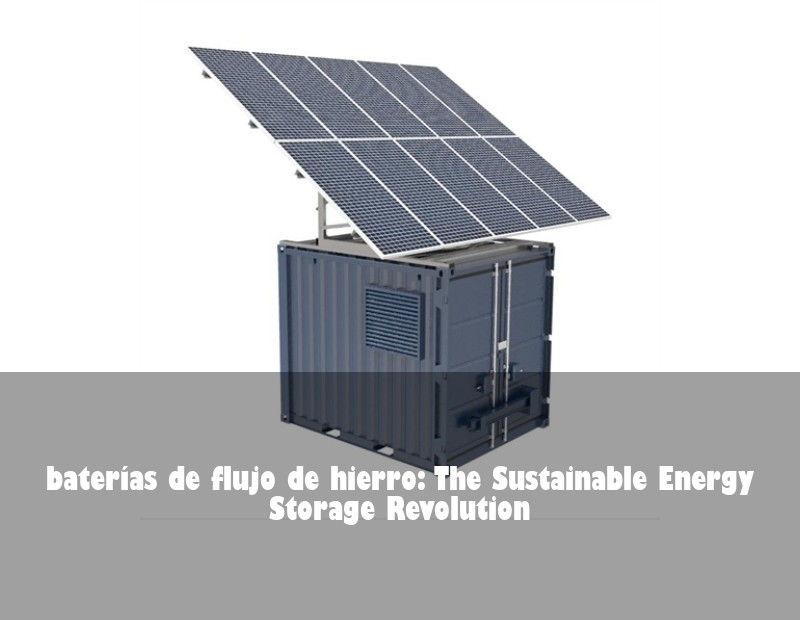
As Europe races toward its 2030 renewable energy targets, grid operators face a critical challenge: how to store solar and wind power for days—not just hours. Enter baterías de flujo de hierro (iron flow batteries), a technology turning heads from Berlin to Barcelona. Unlike lithium-ion, these batteries use earth-abundant iron, salt, and water to deliver affordable, long-duration storage. Let’s explore why this could be Europe’s missing link for energy resilience.
Table of Contents
- The Energy Storage Dilemma: Why Hours Aren’t Enough
- Lithium-Ion’s Achilles’ Heel: Cost and Scalability
- How Iron Flow Batteries Solve the Long-Duration Puzzle
- Real-World Success: A Spanish Solar Farm Case Study
- 5 Unbeatable Advantages of Iron Flow Technology
- What’s Next for Iron Flow Batteries in Europe?
- Your Move: Is Your Energy Strategy Ready for 12-Hour Storage?
The Energy Storage Dilemma: Why Hours Aren’t Enough
A wind farm in Scotland generates surplus power during a stormy night, but by midday, demand peaks while winds drop. With Europe targeting 42.5% renewable energy by 2030, such mismatches are daily realities. The problem? Most batteries today discharge for 2-4 hours—far too short for seasonal shifts or multi-day weather events.
Lithium-Ion’s Achilles’ Heel: Cost and Scalability
Lithium-ion dominates the market, but its limitations glare in long-duration scenarios. Consider these pain points:
- Cost Surge: Beyond 4 hours, lithium systems require costly oversizing. A 10-hour system can cost 3x more per kWh than a 4-hour setup.
- Resource Risks: Europe imports 98% of its lithium. Prices swung by 400% in 2022 alone, creating supply chain chaos.
- Safety Trade-offs: Thermal runaway risks demand expensive containment systems, eating into project budgets.
As one German grid operator told me: "We’re patching holes with bandaids. We need solutions that last through the night—and beyond."
How Iron Flow Batteries Solve the Long-Duration Puzzle
Iron flow batteries work elegantly: Two tanks hold iron-based electrolytes. When charging, electrons convert Fe²⁺ to Fe³⁺; discharging reverses the process. Unlike sealed batteries, they separate energy (tank size) from power (stack size), allowing custom duration without re-engineering. Key features:
- Chemistry: Iron chloride and saltwater—non-toxic and fully recyclable.
- Lifespan: 25+ years with zero capacity fade (vs. lithium’s 10-15 year degradation).
- Duration: Easily scales to 12+ hours by adding electrolyte volume.
Why Engineers Love the Simplicity
No exotic minerals, no cooling systems, no fire suppression. Just pumps, tanks, and stacks repairable with off-the-shelf parts. It’s like comparing a diesel generator to a wind turbine—one has fewer moving pieces.
Real-World Success: A Spanish Solar Farm Case Study
In 2023, Andalusia’s 50MW solar farm faced a problem: Their lithium batteries couldn’t store enough daylight for evening demand spikes. Their solution? A 2MW/24MWh iron flow battery system from ESS Inc. Results after 12 months:
- Cost Savings: 40% lower CAPEX vs. equivalent lithium systems
- Performance: 97% availability during peak summer demand
- ROI: Payback achieved in 3.8 years by selling stored power at €210/MWh peak rates
As the plant manager noted: "We now run sunset-to-sunrise on stored solar—something impossible with our old batteries." Data sourced from Energy-Storage.news.
5 Unbeatable Advantages of Iron Flow Technology
Beyond the Spanish case, iron flow batteries shine in European contexts:
- Safety First: Water-based electrolytes won’t ignite—ideal for urban areas (no more "thermal runaway" nightmares).
- Material Abundance: Iron is 1,000x more abundant than lithium in Europe. No geopolitical supply risks.
- Eco-Endgame: Batteries are 98% recyclable using existing steel industry processes.
- Temperature Tolerance: Operates from -5°C to 50°C without performance loss—perfect for Nordic winters or Mediterranean summers.
- Total Cost of Ownership: 60% lower than lithium over 20 years, per Lazard’s 2023 analysis.
What’s Next for Iron Flow Batteries in Europe?
With the EU’s Net-Zero Industry Act prioritizing non-lithium storage, adoption is accelerating. Innovations on the horizon:
- Modular "storage-in-a-container" designs for rapid deployment
- AI-driven electrolyte optimization boosting efficiency to 85%+
- Hybrid systems pairing iron flow with hydrogen for week-long storage
As one Amsterdam grid innovator put it: "This isn’t just storage—it’s industrial strategy."
Your Move: Is Your Energy Strategy Ready for 12-Hour Storage?
Europe’s energy transition demands solutions that outlast the sunset. Iron flow batteries offer durability without resource drama. So, here’s my question: When your next project needs storage that thrives beyond 4 hours, will you bet on scarce metals—or the earth beneath your feet?
 Inquiry
 Online Chat