


Grid Tie Battery Backup Solar System: Your Shield Against Power Uncertainty
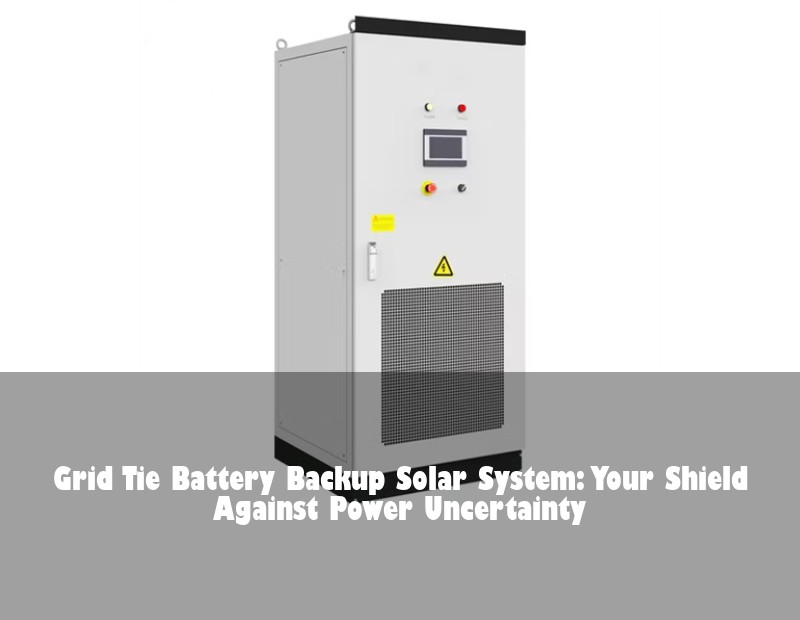
Table of Contents
- Introduction: The Rising Challenge of Grid Stability
- Understanding Grid Tie Battery Backup Solar Systems
- How Does a Grid-Tie Battery Backup System Function?
- Real-World Impact: A German Case Study
- Top Benefits of Grid-Tie Battery Backup Systems
- Future-Proofing Your Energy: Key Considerations
- Take Control of Your Energy Future
Ever noticed how flickering lights during a storm make you hold your breath? Across Europe, homeowners and businesses face growing grid instability—from voltage fluctuations in Italy to winter outages in Scandinavia. But what if your solar panels could do more than just cut bills? Enter the grid tie battery backup solar system, a seamless fusion of renewable energy and resilience that keeps your lights on when the grid fails. Let’s explore how this technology redefines energy security.
Understanding Grid Tie Battery Backup Solar Systems
Traditional solar setups feed excess energy directly into the grid—great for earning credits, but useless during outages. A grid-tie battery backup system changes the game. It integrates batteries with your solar array, storing surplus energy instead of exporting it all. When the grid drops, it automatically isolates your home ("islanding") and powers critical loads from the batteries. Think of it as an energy airbag: invisible until you need it.
How Does a Grid-Tie Battery Backup System Function?
Three components work in concert:
- Solar Panels: Generate DC electricity.
- Hybrid Inverter: Converts DC to AC, manages battery charging/discharging, and enables grid isolation.
- Battery Bank: Stores energy (typically lithium-ion) for backup use.
Data shows these systems achieve 95% round-trip efficiency—meaning minimal energy loss during storage. For context, that’s like losing just 5 cents for every euro you save. During peak demand, when grid electricity prices spike (up to €0.40/kWh in Germany), your stored energy offsets costs. It’s not just backup; it’s smart energy arbitrage.
Real-World Impact: A German Case Study
Consider the Müller family in Bavaria. After enduring 8+ annual grid outages, they installed a 10kW solar array with 15kWh battery backup. Results:
- Outage Protection: Zero disruptions during 2023’s winter storms (vs. 12 hours average downtime locally).
- Financial ROI: Reduced grid dependence by 78%, saving €1,200/year even after accounting for Germany’s declining feed-in tariffs.
- Carbon Impact: Achieved 90% self-sufficiency, slashing annual emissions by 4.2 tons—equivalent to planting 100 trees.
This mirrors broader trends: Germany’s residential battery installations surged by 52% in 2022, driven by falling battery costs (now €800/kWh, down 60% since 2015).
Top Benefits of Grid-Tie Battery Backup Systems
Beyond blackout protection, these systems deliver:
- Energy Independence: Reduce reliance on volatile grid prices (European electricity costs rose 30% in 2022 alone).
- Peak Shaving: Use stored energy during high-tariff hours, enhancing bill savings.
- Grid Support: Advanced systems can feed power back during emergencies, stabilizing local networks.
As one engineer told me: "It’s like having a Swiss Army knife for energy—savings, sustainability, and security in one package."
Future-Proofing Your Energy: Key Considerations
When evaluating systems, prioritize:
- Scalability: Can batteries be expanded later?
- Software Intelligence: Look for AI-driven energy management (e.g., weather-based charging).
- Regulatory Compliance: Ensure adherence to local standards like the UK’s G98/G99 or Germany’s VDE-AR-N 4105.
With the EU’s Energy System Integration Strategy pushing for decentralized resilience, such systems aren’t just optional—they’re inevitable.
Take Control of Your Energy Future
Ready to transform your solar investment from a cost-cutter to a lifeline? What energy challenge keeps you awake at night—outages, costs, or carbon footprints? Share your thoughts below, and let’s explore how a grid-tie battery backup solar system can address it.
 Inquiry
 Online Chat