


Designing Your Perfect Off Grid Cabin Electrical System: Freedom Meets Reliability
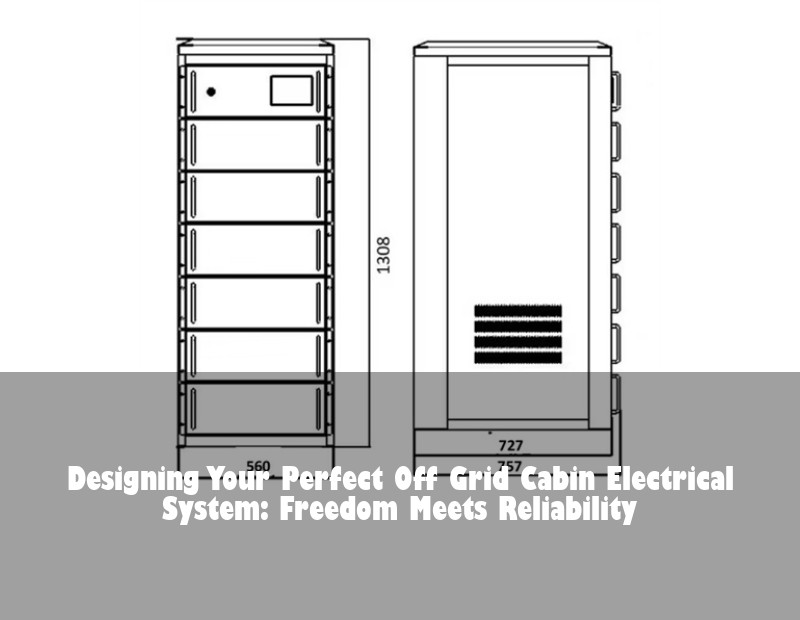
Imagine waking up deep in the Scandinavian woods or high in the Alps, your cabin warm and lights glowing, completely independent from the grid. That's the promise of a well-designed off grid cabin electrical system. No more reliance on noisy generators or expensive, distant power lines. But achieving true energy independence requires smart planning. Let's explore how modern solar and storage technology makes this dream a practical, reliable reality.
Table of Contents
- The Off-Grid Challenge: Beyond Simple Power Outages
- The Solar-Storage Solution: Core Components of Your Off Grid Powerhouse
- Smart Design: Sizing and Optimizing Your System for Real-World Use
- Proof in the Peaks: A Real-World Alpine Cabin Case Study
- Beyond Basics: Enhancing Reliability and Resilience
- Is Your Cabin Ready for True Energy Freedom?
The Off-Grid Challenge: Beyond Simple Power Outages
Relying solely on a generator or limited battery power often leads to frustration. You might notice lights dimming when the fridge kicks on, or worse, being completely without power on a cloudy winter day. Traditional solutions fall short because:
- Generators are noisy & costly: Constant refueling and maintenance disrupt the peaceful cabin experience.
- Limited battery runtime: Basic systems drain quickly, especially when powering essentials like heating or water pumps.
- Weather vulnerability: Extended cloudy periods or heavy snowfall can cripple under-sized solar setups.
This isn't just inconvenience; it's a limitation on how you can use your remote sanctuary. A truly robust off grid cabin electrical system must overcome these consistently.
The Solar-Storage Solution: Core Components of Your Off Grid Powerhouse
The modern solution integrates three key technologies into a seamless off grid cabin electrical system:
- High-Efficiency Solar Panels: Your primary energy harvesters. Modern monocrystalline panels, like those using PERC cells, can achieve over 22% efficiency, capturing maximum energy even under the lower-angle sun common in Northern Europe. Mounting systems must withstand local conditions (heavy snow loads in Scandinavia, high winds in coastal Scotland).
- Intelligent Lithium-Ion Storage: The heart of independence. Lithium Iron Phosphate (LFP) batteries dominate due to safety, longevity (6,000+ cycles), and excellent performance in cold climates (common in cabin locations). Unlike older lead-acid, they offer deeper discharge (80-90% DoD) without damage. A quality Battery Management System (BMS) is non-negotiable for safety and lifespan.
- Sophisticated Hybrid Inverter/Charger: The system's brain. It manages solar input, battery charging/discharging, AC power output, and can seamlessly start a backup generator if needed. Look for models with high peak surge capacity (e.g., 2x continuous rating) to handle motor starts (pumps, tools) and true sine wave output for sensitive electronics.
Smart Design: Sizing and Optimizing Your System for Real-World Use
Getting the size right is critical. Undersizing leads to blackouts; oversizing wastes resources. Here's the professional approach:
- Load Audit (The Non-Negotiable First Step): List EVERY appliance, its wattage, and estimated daily run time. Don't forget phantom loads and seasonal variations (e.g., higher heating demand). Tools like Renogy's Load Calculator help.
- Solar Harvest Potential: Use location-specific solar irradiance data (e.g., PVGIS from the European Commission). Account for worst-case scenarios (December in Norway, not June!). Factor in tilt, azimuth, and potential shading.
- Battery Storage Calculation: Size for "Days of Autonomy" (how many cloudy days you need to cover, typically 3-5 days in Europe). Include depth of discharge limit. Formula: Total Daily Load (kWh) x Days of Autonomy / DoD Limit = Usable Battery Capacity (kWh).
- Inverter Sizing: Must handle the peak simultaneous load (e.g., water pump + microwave + lights). Add a 20-30% safety margin.
Pro Tip: Prioritize DC appliances where possible (e.g., DC fridge, LED lights) to minimize inverter losses, boosting overall system efficiency by 5-15%.
Proof in the Peaks: A Real-World Alpine Cabin Case Study
Consider "Bergheimat," a year-round cabin in the Swiss Alps at 1,800m altitude. The owners needed reliable power for heating (heat pump), lighting, fridge, water pump, and occasional power tools, completely off-grid.
- Challenge: Harsh winters, heavy snowfall, potential for 5+ consecutive cloudy/snowy days. Peak load: 3.5kW (heat pump startup surge).
- Solution:
- Solar: 5.2 kWp array (16 x 325W bifacial panels), ground-mounted at 60° tilt for snow shedding and winter sun optimization.
- Storage: 19.2 kWh LFP battery bank (4 x 5.12kWh modules).
- Inverter: 48V Hybrid Inverter/Charger (6kW continuous, 12kW surge) with integrated MPPT solar charge controller.
- Backup: Integrated auto-start propane generator for extreme low-battery events.
- Results (12 Months Operation):
- Generated 5,800 kWh annually (validated via PVGIS).
- Generator runtime: < 15 hours total (only during deepest winter storms).
- Zero unexpected power outages. Battery State of Health: 99% after one year.
This demonstrates how precise sizing and quality components deliver true resilience, even in demanding European mountain environments.
Beyond Basics: Enhancing Reliability and Resilience
A truly professional off grid cabin electrical system considers future needs and extreme events:
- Smart Monitoring & Control: Remote monitoring via apps (e.g., Victron VRM, SolarEdge) provides real-time insights and alerts, allowing proactive management from anywhere. Track energy flow, battery health, and solar yield.
- Weather-Responsive Operation: Advanced systems can pre-charge batteries based on storm forecasts (using weather API integration).
- Modular Expansion: Design with future capacity increases in mind. Can you easily add more battery modules or solar panels later?
- Fire Safety & Compliance: Adherence to local regulations (e.g., IEC 60364-7-712 for off-grid systems) and using certified components with proper fusing, disconnect switches, and battery enclosures is paramount, especially in remote, fire-sensitive areas.
Is Your Cabin Ready for True Energy Freedom?
Designing a reliable off grid cabin electrical system is an investment in peace of mind and unspoiled nature. It requires careful planning, quality components, and an understanding of your specific environment and needs. The technology is proven, as the Alpine case shows – delivering silent, clean, and dependable power where the grid can't reach.
What's the one energy-dependent appliance in your cabin that you couldn't live without during a deep winter retreat, and how would a properly designed solar-storage system ensure it never lets you down?
 Inquiry
 Online Chat