


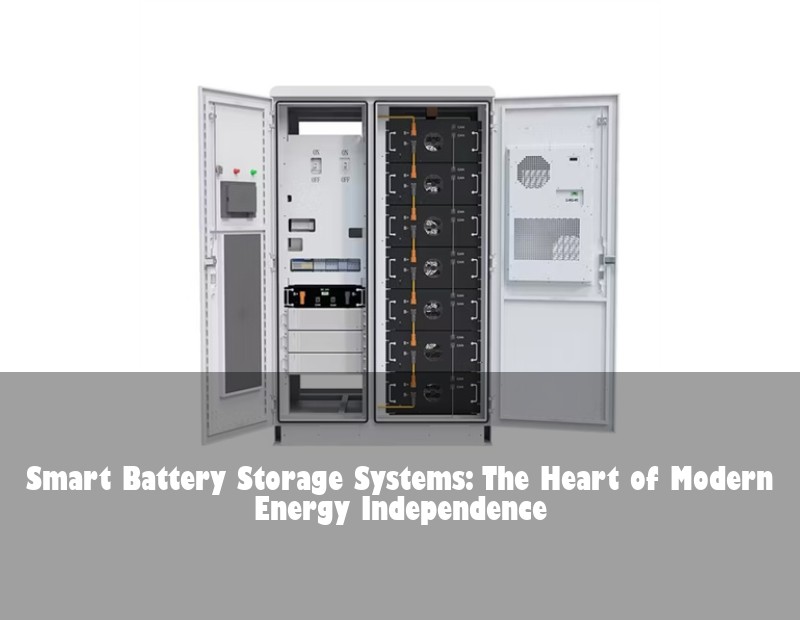
Smart Battery Storage Systems: The Heart of Modern Energy Independence
- Rising Energy Prices & Solar Limitations
- The Smart Storage Solution
- Real-World Case: Germany's Success
- How These Systems Actually Work
- Beyond Savings: Grid Stability & Sustainability
The Unavoidable Reality: Rising Energy Bills & Solar Limitations
You've installed solar panels expecting lower electricity bills, only to watch 60% of your generated power flow back to the grid during peak sun hours. When evening comes, you're buying expensive grid electricity – like filling a leaky bucket. This daily paradox affects millions of European households leveraging solar without storage. Data from IEA shows solar adoption grew 35% YoY across Europe, yet without storage, self-consumption rarely exceeds 30-40%. The culprit? Daylight/tariff mismatch and weather intermittency.
Smart Battery Storage Systems: Bridging the Generation-Consumption Gap
Enter smart battery storage systems – your solar energy's "pause button." These aren't passive containers; they're AI-driven energy managers. Using predictive algorithms, they:
- Store surplus solar instead of exporting it at low rates
- Discharge during peak tariffs or outages
- Sync with grid signals to balance local networks
Consider it a personal energy concierge: learning your habits, weather patterns, and electricity prices to optimize every kilowatt-hour. As SolarPower Europe notes, pairing solar with storage boosts self-consumption to 70-90%, transforming rooftops into true power plants.
Case Study: Germany's Household Energy Revolution
Let's examine real results in Bavaria, where the Müller family installed a 10kWh smart battery system in 2022:
- Problem: 4kW solar PV exported 61% of daytime generation
- Solution: Lithium-phosphate battery + adaptive energy management software
- Results (12-month data):
- Self-consumption jumped from 39% to 84%
- Grid dependence reduced to 16% (from 71%)
- Annual savings: €1,240 despite 22% energy price hikes
This mirrors Germany's national trend, where BSW-Solar reports 80% of new solar installations now include storage – over 400,000 systems operational as of 2023. Why? Dynamic electricity pricing makes "load shifting" financially irresistible.
Inside the Tech: Intelligence Over Hardware Alone
What distinguishes smart systems from basic batteries? Three layers of intelligence:
- Forecasting Layer: Analyzes weather/tariff APIs for 24-hour optimization
- Adaptive Layer: Learns usage patterns (e.g., EV charging schedules)
- Grid-Interactive Layer: Responds to utility signals for voltage/frequency stabilization
The hardware matters, but the software transforms storage from a backup gadget to an active grid participant. As one Dutch installer told me: "We're not selling batteries; we're selling energy autonomy algorithms."
Benefits Beyond Savings: Your Role in the Energy Transition
While ROI typically falls between 5-7 years in Europe currently, the broader impacts are transformative:
- Grid Relief: Stored solar reduces evening demand spikes – crucial as EV adoption grows
- Renewable Integration: Allows higher solar penetration without infrastructure upgrades
- Resilience**: 3+ days of backup during outages (critical with extreme weather events)
Imagine your home becoming a micro-nodule in a decentralized energy web. That's where Europe is heading – and smart storage is the enabler.
What energy independence milestones could your household achieve with the right storage partner?
 Inquiry
 Online Chat