


Solar Energy Pros and Cons: A Balanced Guide for Global Sustainability
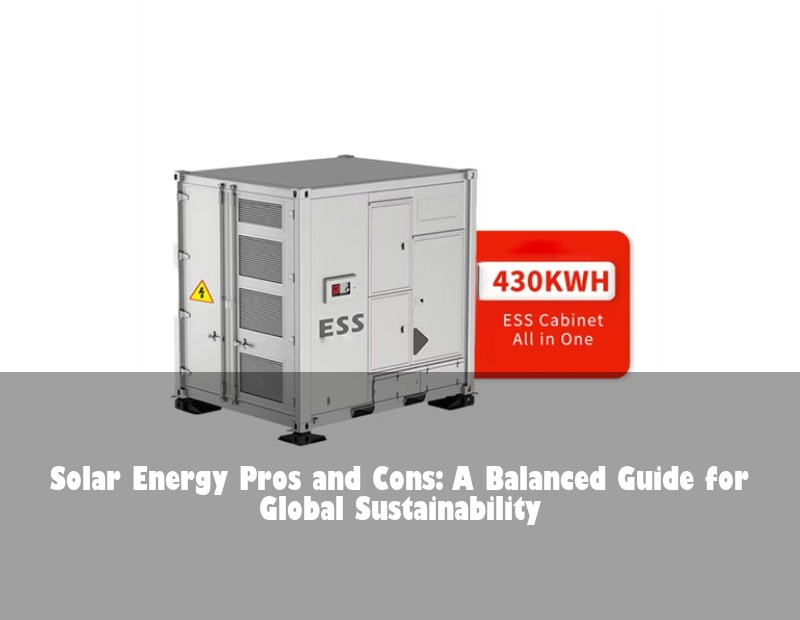
Table of Contents
The Solar Revolution: Why It Matters Now
Globally, solar capacity surged by 22% in 2023 alone—but what's driving this momentum? As we confront climate urgency and energy security crises, understanding solar energy pros and cons becomes critical. In Europe, where REPowerEU targets 45% renewable energy by 2030, solar sits at the heart of decarbonization strategies. Yet, like any transformative technology, it presents nuanced trade-offs worth examining.
Advantages of Solar Energy
Economic Benefits and ROI
Solar isn't just green—it's a wealth generator. Consider these facts:
- European homeowners recoup installation costs in 6-10 years through drastically lowered electricity bills.
- Utility-scale solar now costs €0.03–0.05/kWh, undercutting fossil fuels by 50%.
In Spain, farmers use solar canals to slash irrigation expenses while selling surplus power—an elegant dual-income model.
Environmental Impact Reduction
Unlike coal or gas, solar emits zero operational CO₂. A single 5kW residential system eliminates 3–4 tons of carbon annually—equivalent to planting 100 trees yearly. The lifecycle emissions? Modern panels offset their manufacturing footprint in under 2 years.
Energy Independence & Resilience
After Russia’s 2022 gas cuts, Poland accelerated rooftop solar adoptions by 200%. As one Warsaw homeowner told me: "My panels turned geopolitical chaos into mere background noise."
Challenges of Solar Adoption
Intermittency & Storage Complexities
Solar doesn’t generate at night or during heavy cloud cover—creating grid stability concerns. Battery solutions like lithium-ion add 25–40% to system costs, though innovations like iron-air batteries promise cheaper long-duration storage.
Upfront Investment Barriers
While prices fell 90% since 2010, a 10kW European installation still averages €15,000. Financing gaps persist in emerging markets—where micro-loans show promise.
Land Use and Manufacturing Footprint
Utility farms require ~2.5 acres per MW, raising biodiversity concerns. Recycling also lags—only 10% of panels are currently recycled—but EU regulations now mandate 85% recovery by 2027.
European Case Study: Germany's Energiewende
Germany’s solar journey reveals both triumphs and lessons. Despite having Nordic-level sunshine, it became a solar leader through:
- Feed-in tariffs: Spurred 60 GW installations (covering 12% of national demand)
- Community projects: 50% of renewables are citizen-owned
Yet, grid bottlenecks caused €1.4B in curtailment costs in 2022. The solution? Balancing solar with wind and hydrogen—a strategy now mirrored in France’s 2030 National Energy Plan.
Innovations Bridging the Gap
Next-gen tech tackles solar’s limitations head-on. Perovskite-silicon tandem cells achieve 33% efficiency (vs. standard 22%), while agrivoltaics—combining crops with elevated panels—boost land productivity by 60%. In Rotterdam, floating solar farms cool reservoirs while generating power—a win-win engineering feat.
What solar evolution excites you most?
From vertical bifacial panels absorbing reflected light to AI-optimized microgrids—the possibilities are accelerating. I’d love to hear: Which innovation could tip the scales for your community’s energy future?
 Inquiry
 Online Chat