


Unlock Energy Freedom: Why a Solar System for Domestic Use is Europe's Smartest Home Investment
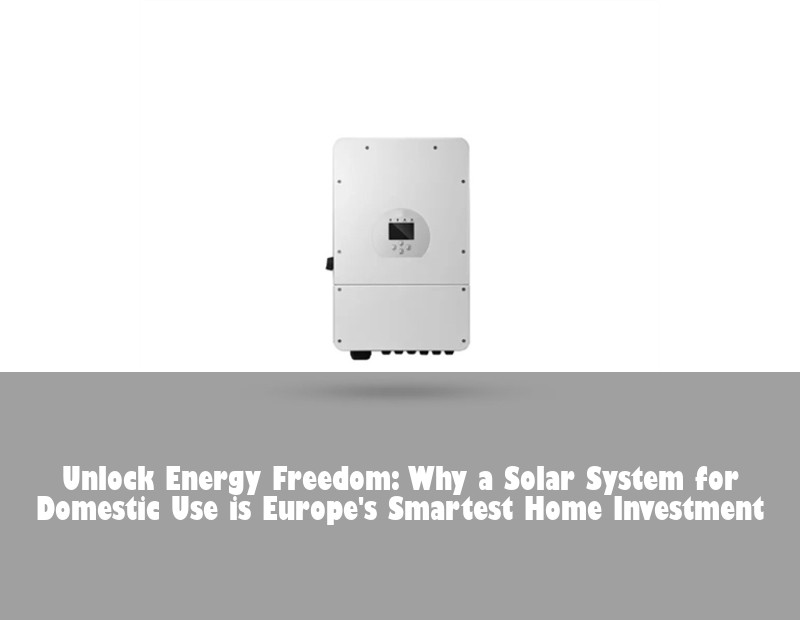
Table of Contents
- The Energy Crisis: Why European Homeowners Are Seeking Alternatives
- The European Solar Boom: From Niche to Necessity
- How Domestic Solar Systems Actually Work (Simplified)
- The Financial Case: Crunching the Numbers for Your Home
- Real-World Success: A Berlin Family's Solar Transformation
- Beyond Savings: Environmental Impact & Energy Security
- Choosing Your Perfect Solar System for Domestic Use
- What's Next? Emerging Solar Technologies for Homes
- Your Solar Journey Starts Here
The Energy Crisis: Why European Homeowners Are Seeking Alternatives
Remember opening your energy bill last winter? That collective gasp across Europe wasn't just the cold air. With electricity prices soaring up to 80% in some regions (Eurostat, 2023), homeowners face a perfect storm: volatile fossil fuel markets, geopolitical tensions, and climate urgency. This isn't abstract economics—it's the reality forcing families to choose between heating and essentials. But what if your roof could become a solution? Enter the solar system for domestic use: no longer a luxury, but an energy insurance policy generating power right where you consume it.
The European Solar Boom: From Niche to Necessity
European rooftops are undergoing a silent revolution. In 2022 alone, residential solar installations grew by 47% year-on-year across the EU, with Germany leading at 7.3 GW added (SolarPower Europe, 2023). This isn't just about eco-consciousness—it's hard-nosed economics. Consider these game-changers:
- Panel efficiency increased 25% since 2018 while costs dropped 40% (Fraunhofer ISE)
- Payback periods shortened to 6-8 years in sun-rich Spain and Italy
- Smart energy management systems now optimize every watt
As grid instability grows, the solar system for domestic use transforms from environmental statement to household essential—a shift as profound as the move from landlines to smartphones.
How Domestic Solar Systems Actually Work (Simplified)
Let's demystify the magic behind your future power plant:
- Solar Panels: Photovoltaic cells convert sunlight into DC electricity
- Inverter: The "brain" converting DC to usable AC power
- Battery Storage (Optional but recommended): Stores excess energy for nighttime use
- Monitoring System: Real-time tracking via smartphone apps
Modern systems like those from SolarEdge or Huawei include AI that learns your consumption patterns, automatically selling surplus energy back to the grid when rates peak. It's not just generation—it's energy intelligence.
The Financial Case: Crunching the Numbers for Your Home
Let's talk ROI. A typical 4kW system in Europe:
- Installation cost: €7,000-€10,000 after subsidies
- Annual savings: €800-€1,200 on electricity bills
- Increased property value: 4.1% average premium (UCL Energy Institute)
- Feed-in tariffs: Earn €0.08-€0.15 per kWh exported in countries like France
With EU subsidies covering 20-60% of costs, the break-even point keeps accelerating. As grid prices climb, your solar investment actually appreciates.
Real-World Success: A Berlin Family's Solar Transformation
Meet the Hoffmanns: two parents, two teens, and a 1920s Berlin row house. Before installing their solar system for domestic use in 2021:
- Annual energy bill: €2,300
- Carbon footprint: 4.8 tonnes CO2/year
- Grid dependency: 100%
After adding 12 panels + 10kWh battery:
- Current bills: €190/year (92% reduction)
- Self-sufficiency: 78% year-round
- CO2 reduction: 3.9 tonnes annually
"Our system paid for itself in 6 years," says Klaus Hoffmann. "Now with energy prices soaring, it feels like we installed a money printer." Data from Fraunhofer ISE confirms such results are typical for German homes with south-facing roofs.
Beyond Savings: Environmental Impact & Energy Security
While financial returns grab headlines, the deeper benefits resonate powerfully:
- Each kW of home solar reduces CO2 by 0.75 tonnes annually—equivalent to planting 37 trees (EPIA)
- Battery-backed systems provide backup during grid outages (increasingly common during extreme weather)
- Reduces strain on national grids during peak demand
As the International Energy Agency notes, distributed solar is critical to Europe's decarbonization goals. Your roof literally becomes climate action.
Choosing Your Perfect Solar System for Domestic Use
Not all systems are equal. Consider these key factors:
- Roof Audit: Orientation, shading, and structural capacity (professional assessment essential)
- Component Synergy: Mismatched panels/inverters can lose 15% efficiency
- Future-Proofing: Leave capacity for EV chargers or heat pumps
- Smart Management: Look for systems with AI optimization like Tesla Solar or Sonnen
Pro tip: Battery storage pays off fastest in countries with high night/day price differentials like the UK's Octopus Agile tariff.
What's Next? Emerging Solar Technologies for Homes
The innovation curve is accelerating:
- BIPV (Building-Integrated PV): Solar tiles that look like conventional roofing
- Perovskite cells: Next-gen panels with 30%+ efficiency in lab settings
- Virtual Power Plants: Aggregating home systems to stabilize regional grids
Your solar system for domestic use today will likely integrate with smart heat pumps and EV chargers tomorrow—creating a self-regulating energy ecosystem.
Your Solar Journey Starts Here
Imagine this: Next winter, while neighbors stress about energy bills, you're monitoring your rooftop's silent power generation with your morning coffee. The solar system for domestic use isn't just technology—it's energy democracy. So here's my question: What's your biggest hesitation about harnessing solar, and how can we help address it? Your personalized energy future awaits.
 Inquiry
 Online Chat