


Unlocking Renewable Potential with Static Electricity Storage
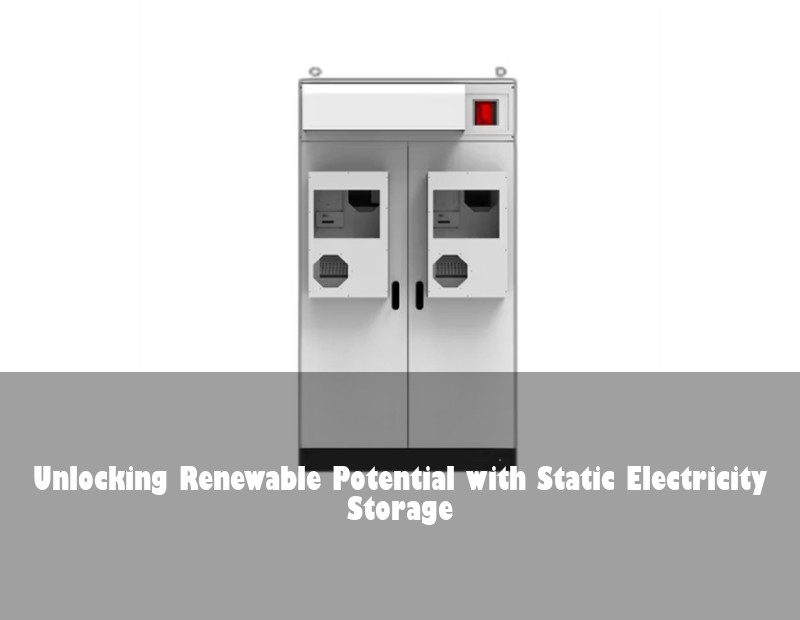
As Europe accelerates its renewable energy transition, a critical challenge emerges: how to store intermittent solar and wind power effectively. Enter static electricity storage – an innovative approach using electric fields rather than chemical reactions. Unlike traditional batteries, this technology offers instantaneous response and exceptional durability, making it ideal for grid stabilization. With EU countries targeting 45% renewable energy by 2030, static storage could be the missing piece in our clean energy puzzle.
Table of Contents
- What Exactly is Static Electricity Storage?
- The Technical Hurdles We Must Clear
- Breakthroughs Changing the Game
- Real-World Success: Germany's Grid Stabilization Project
- Where Do We Go From Here?
What Exactly is Static Electricity Storage?
Static electricity storage captures energy in an electric field between two conductors, typically using capacitors or supercapacitors. Imagine it like storing water under pressure rather than in a container – energy releases instantly when needed. Here's why it matters:
- Speed: Responds in milliseconds vs. seconds for lithium-ion batteries
- Longevity: Withstands 1+ million charge cycles (vs. 5,000-10,000 for batteries)
- Efficiency: Achieves 95-98% round-trip efficiency
You might be thinking, "If it's this good, why isn't it everywhere?" Well, that brings us to the challenges...
The Technical Hurdles We Must Clear
The Achilles' heel of static storage has been energy density. While lithium-ion batteries store 150-250 Wh/kg, traditional capacitors manage just 5-10 Wh/kg. But here's the exciting part: recent research from the Nature Energy Journal shows graphene-based supercapacitors now achieving 90 Wh/kg – closing the gap significantly.
Other challenges include:
- Voltage limitations during rapid discharge
- Higher upfront costs per kWh capacity
- Complex integration with existing BMS (Battery Management Systems)
Breakthroughs Changing the Game
Material science advancements are solving these limitations. Take dielectric polymers – these thin-film materials boost energy density by 300% compared to conventional electrolytic capacitors. Companies like Skeleton Technologies now offer curved graphene supercapacitors that deliver 15-second bursts of 5MW power. That's enough to restart a wind turbine during voltage dips!
We're also seeing hybrid systems emerge. For example, pairing static storage with lithium-ion creates a "best of both worlds" solution: capacitors handle rapid fluctuations while batteries manage longer discharges.
Real-World Success: Germany's Grid Stabilization Project
Let's examine a concrete European application. In 2022, Tennet (Germany's grid operator) deployed a 10MW static storage system in Bavaria to address renewable intermittency. The results?
- Reduced grid stabilization costs by €2.3 million annually
- 96.7% availability during peak demand events
- Prevented 7 regional blackouts in its first year
As Dr. Maria Schmidt, Tennet's CTO, noted: "Static storage acts like a shock absorber for our grid – responding to solar fluctuations faster than traditional solutions." This project demonstrates how the technology solves real grid congestion issues documented in the ENTSO-E Ten-Year Network Development Plan.
Where Do We Go From Here?
The European Commission's Net-Zero Industry Act explicitly names energy storage as a strategic technology. With static storage R&D receiving €780 million in EU funding through 2026, we'll likely see:
- Commercial 120 Wh/kg supercapacitors by 2025
- Integrated solar+storage microgrids for rural communities
- EV charging stations using static buffers to reduce grid demand
But I'm curious – what specific energy challenge in your region could static storage solve? Could it be frequency regulation for wind farms? Or perhaps backup power for critical infrastructure? The possibilities are expanding daily, and your insights matter as we shape this technology's future.
 Inquiry
 Online Chat