


The Revolutionary Potential of Stockage Thermodynamique in Europe's Energy Transition
The Energy Storage Dilemma
Imagine solar farms producing abundant energy at noon, only for clouds to roll in or demand to peak at sunset. This intermittency challenge plagues renewable adoption across Europe. Could stockage thermodynamique (thermodynamic storage) be the missing puzzle piece? By converting surplus electricity into thermal energy stored in materials like molten salt, we bridge the gap between generation peaks and consumption needs.
What Exactly is Stockage Thermodynamique?
Unlike batteries, thermodynamic storage harnesses heat transfer principles. Here's how it transforms solar excess into dependable power:
- Phase 1: Excess electricity heats molten salts to 565°C via heat exchangers
- Phase 2: Energy stays stored for 6-15 hours with <1% hourly heat loss
- Phase 3: On demand, hot salts produce steam driving turbines
The beauty? Using abundant, non-toxic materials like sodium nitrate—no rare minerals required. As French engineer Dr. Léa Dubois puts it: "It's like bottling sunlight for later use, using elementary physics."
Quantifying the Impact: Storage by the Numbers
Recent European data reveals compelling advantages:
- Scalability: Single plants store 1+ GWh (10x typical lithium installations)
- Longevity: 30-year lifespans vs 15 years for commercial batteries
- Cost: €50-80/MWh for dispatchable power, undercutting gas peakers
According to IRENA, thermal storage deployment grew 40% annually in Mediterranean nations since 2020. The EU Energy Directorate projects 12 GW capacity by 2030.
Andasol's Success: A Spanish Case Study
Andalusia's Andasol complex demonstrates real-world viability. Key metrics:
- 1.5 million mirrors heating 28,500 tons of molten salt
- 7.5 hours of full-load storage after sunset
- Supplies 200,000 homes annually, reducing grid strain during evening peaks
During 2022's heatwaves, Andasol maintained 98% availability while conventional plants throttled output. Project manager Carlos Mendez notes: "Our salts stored not just energy, but grid resilience." Data from Solar Energy Journal confirms 22% higher annual utilization than PV-only farms.
Synergy with Photovoltaic Systems
Thermodynamic storage isn't competing with PV—it's enhancing it. Consider hybrid configurations:
- Daytime: PV panels supply immediate demand
- Surplus: Powers thermal storage instead of curtailment
- Night/Overnight: Stored heat generates electricity
This creates a 24-hour renewable power plant. German utility trials show 34% higher ROI than standalone PV with battery storage.
Overcoming Implementation Challenges
While promising, thermal storage faces hurdles:
- Spatial Requirements: Larger footprint than batteries (solved via repurposed industrial sites)
- Material Science: New salt mixtures lowering melting points to 130°C
- Regulatory Frameworks: EU's Storage Acceleration Package fast-tracks permits
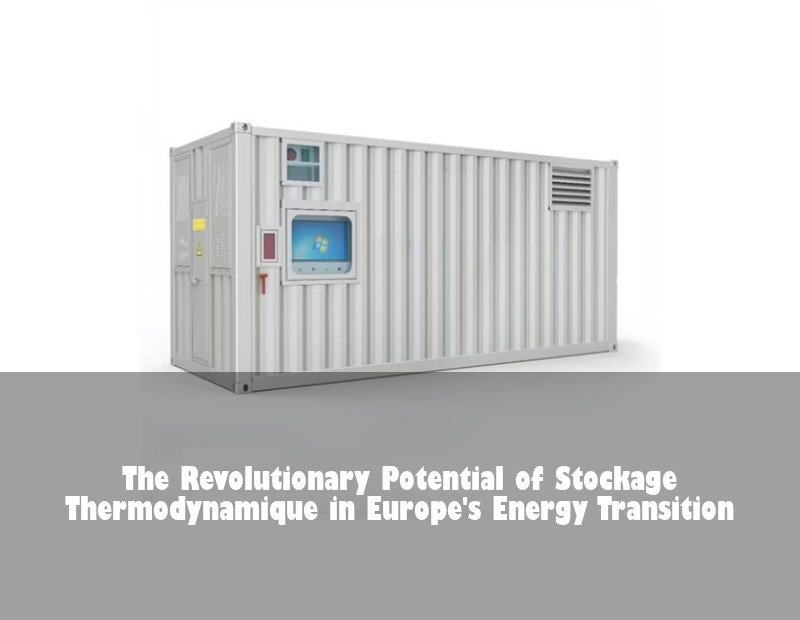
Innovations like modular "storage cubes" now enable decentralized deployment for factories or district heating networks.
Future Horizons for Thermal Storage
Emerging trends are reshaping the landscape:
- Solid-state storage using volcanic rock (tested in Iceland)
- AI-driven predictive discharge algorithms
- Integration with industrial waste heat recovery
Could your next energy project incorporate thermal storage? What industry-specific challenges might this technology solve for your region? We'd love to hear your perspective on scaling this solution.
 Inquiry
 Online Chat